
Gardening for moths
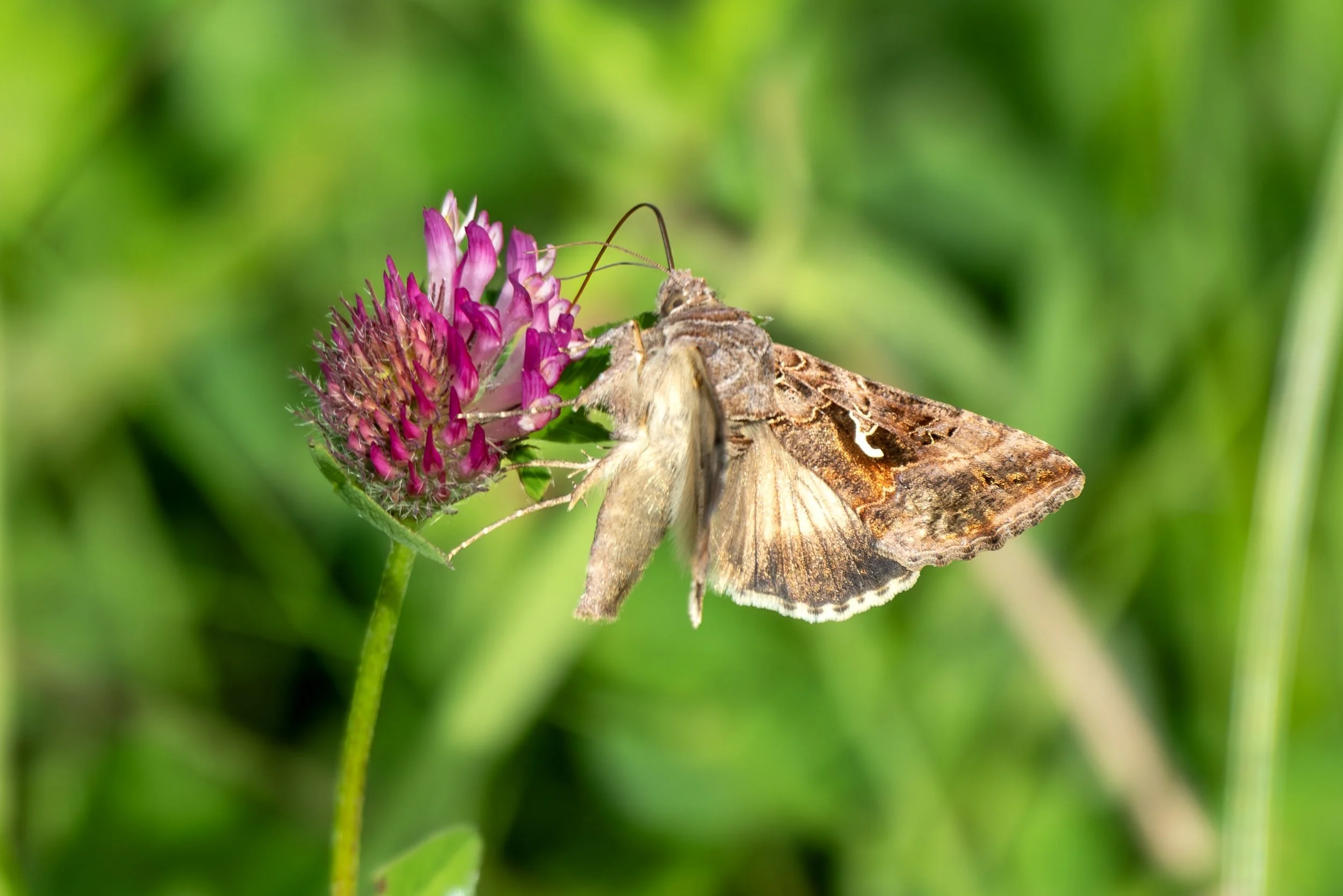
In recent years, awareness around the importance of pollinators has become far more widespread.
Almost everyone now knows why we need to save the bees, the importance in their role of plant pollinators and some of the factors in their decline (pesticides and destruction of habitat being two of the biggest). It’s a huge improvement to see lots of garden centres including information on which plants are bee friendly, and to see so many gardeners making sure to include some of these in their gardens. (See our guide to gardening for bees for more info.)
But did you know that it’s not only bees that pollinate flowers? Butterflies, moths and even flies are important pollinators too. Many flowers have adaptations for certain pollinators (long tubular flowers, for example, being perfectly adapted to the length of a moth’s tongue). There even some plants that have flowers with such unusual designs that they can only be pollinated by one certain species of insect.
And all of these other pollinators, too, are facing the same problems as bees. While there has been a lot of press around the decline in butterfly numbers, much less is written about their less glamorous, slightly dowdier cousins, the moths. But while butterflies make up 4% of the insect family lepidoptera, moths make up the huge remaining 96%.
In fact, in gardening and horticulture, we often only hear about moths when they’re classed as a pest – or, more accurately, their infant form of caterpillar is. The box caterpillar, the oak processionary moth, and the horse chestnut leaf mining moth have all caused a lot of damage to UK plants in the past few years, but don’t let that put you off all moths. There are 2,500 different species in the UK and most are harmless to plants, play a vital role in pollinating and are an important food source for other animals in the food chain, most notably bats.
So, what can you do if you want to attract moths to your garden and play a small part in slowing their decline?
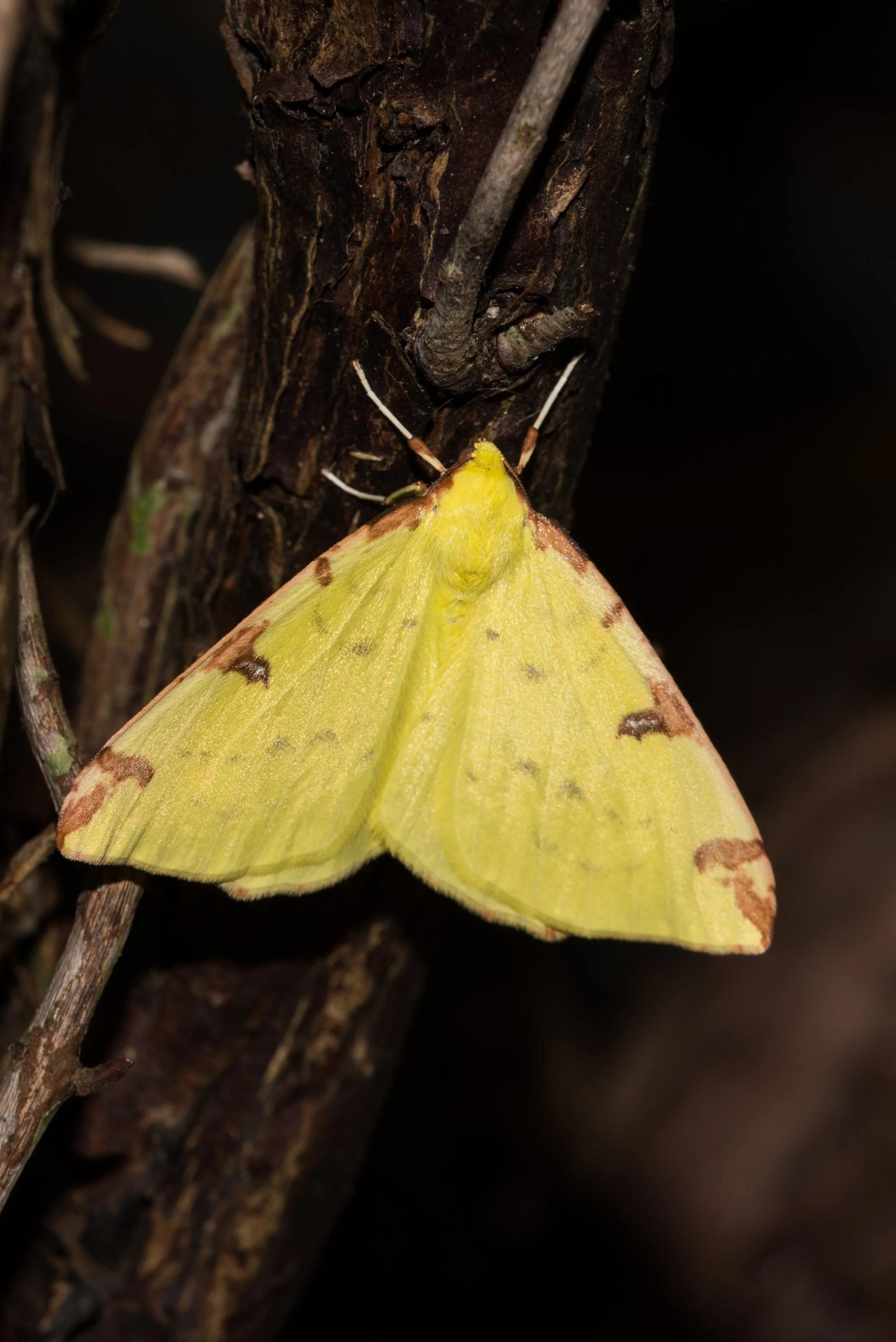
The brimstone moth (Opisthograptis luteolata) is a common species in the UK, often found in gardens. Its food sources are trees such as rowan and blackthorn
Provide habitats
First of all, the caterpillars and moths will need somewhere to live and something to eat. Moths in the UK tend to have specific host plants, where they lay their eggs for the caterpillars to hatch. Including some European plant species as habitats is a great first step: think about blackthorn, hawthorn, ash, apples, lime, oak and willow.
Many low-growing “weeds” such a plantains, dandelions and dock provide crucial plant food for moth caterpillars, so hold off on completely removing these from your patch.
Avoid keeping your garden too tidy: old plant debris, dead leaves, twigs and so on, often provide the perfect habitat for moths and caterpillars, as well as hiding places from predators. Try to leave a wilder area in the garden, and leave some herbaceous plants in situ over winter, only cutting back the dead stems in Spring in time for new growth.
This may sound obvious – but don’t kill all caterpillars that you find in the garden! We have met gardeners who are so worried that their cabbages are going to be eaten or their box topiary defoliated, that they routinely kill every single caterpillar they find. Yes, some caterpillars can wreak havoc, but always try to identify any you find, and only destroy ones that you are absolutely certain are harmful to your plants, and only if you find them in large numbers.
We never recommend pesticide use, because of its harmful knock-on effects, so if you do find a beloved box ball absolutely covered in box caterpillars, then it is far better to individually pick them off, rather than blast them with a mist that will destroy all other insects as well. Picking off caterpillars and leaving them somewhere that a bird can find and eat them is a far better way of preserving the food chain! Always wear gloves, and do ID them first, as some caterpillars have irritant hairs or toxic skin…
Provide nectar for adults
Like butterflies, moths feed on nectar, but as they fly at night, they are drawn to different types of flowers. They prefer white or pale coloured flowers, which glow in the dusk and at night time and are therefore easier to see. Scented flowers attract moths, especially those with a heavy evening or night time scent. And flowers that grow in a tube shape help to exclude other insects, while being the perfect shape for a moth’s tongue.
It’s worth noting that there is far less research into flowers that attract moths than there is for bees or butterflies, but these are some that are known to be especially good for moths.
Do experiment and see what others you can find as well!
Plants for moths
1. Wild honeysuckle (Lonicera pericylmenum)
This fits all the classic criteria for a moth-pleasing plant: pale cream flowers with long tubes and a strong scent at dusk. Popular with moths, and popular with us for all the same reasons!
2. Silene
Most campions are popular with moths, as long as they haven’t been bred as a double flower form (with two rows of petals, that make the nectar much less accessible…) Silene latifolia, the white campion, is a popular meadow plant, which is also attractive to bees. Most campions are only available to buy as seeds, and are often found in a “ready mixed” meadow selection.
3. Common jasmine (Jasminum officinale)
A popular climber, covered in white scented flowers in the summer months. Choose a spot in full sun, where it can scramble upwards: perfect for a wall or fence, and popular with butterflies too.
4. Sweet William (Dianthus barbutus)
This old-fashioned cut flower is a biennial (it flowers in its second year and then dies) that is really easy to grow from seed. It’s perfect for a cut flower garden, you can grow it in a range of different colours, and all single flowered varieties are popular with moths, as well as butterflies.
5. Hebe ‘Great Orme’
An attractive, evergreen shrub, with pink flowers in the Summer and Autumn, that are popular with butterflies and bees as well as moths. A great choice for a year-round position.
6. Nicotiana alata
Nicotiana, or tobacco plant, is another classic moth plant, with white, tubular, evening-scented flowers. Its relative Nicotiana sylvestris is similar, but here in the UK, very few moths have long enough tongues to access the nectar at the bottom of the deep flower tube. If you’re lucky, though, you may see the large Convolvulus Hawk Moth, which migrates to the UK in the Summer months from the Mediterranean.
7. Verbena bonariensis
We’ve spotted lots of hummingbird hawk moths in our nursery this year, and they seem especially fond of the verbenas. Verbena bonariensis is a gorgeous easy-care plant, with small, purple flowers on top of long thin green stems. It’s perfect for a mixed border or a front garden, and is a happy self-seeder, so once in place you won’t need to plant it again! Also very popular with butterflies, so a great plant to include for many pollinators.


