Plant guide: Eurybia divaricata
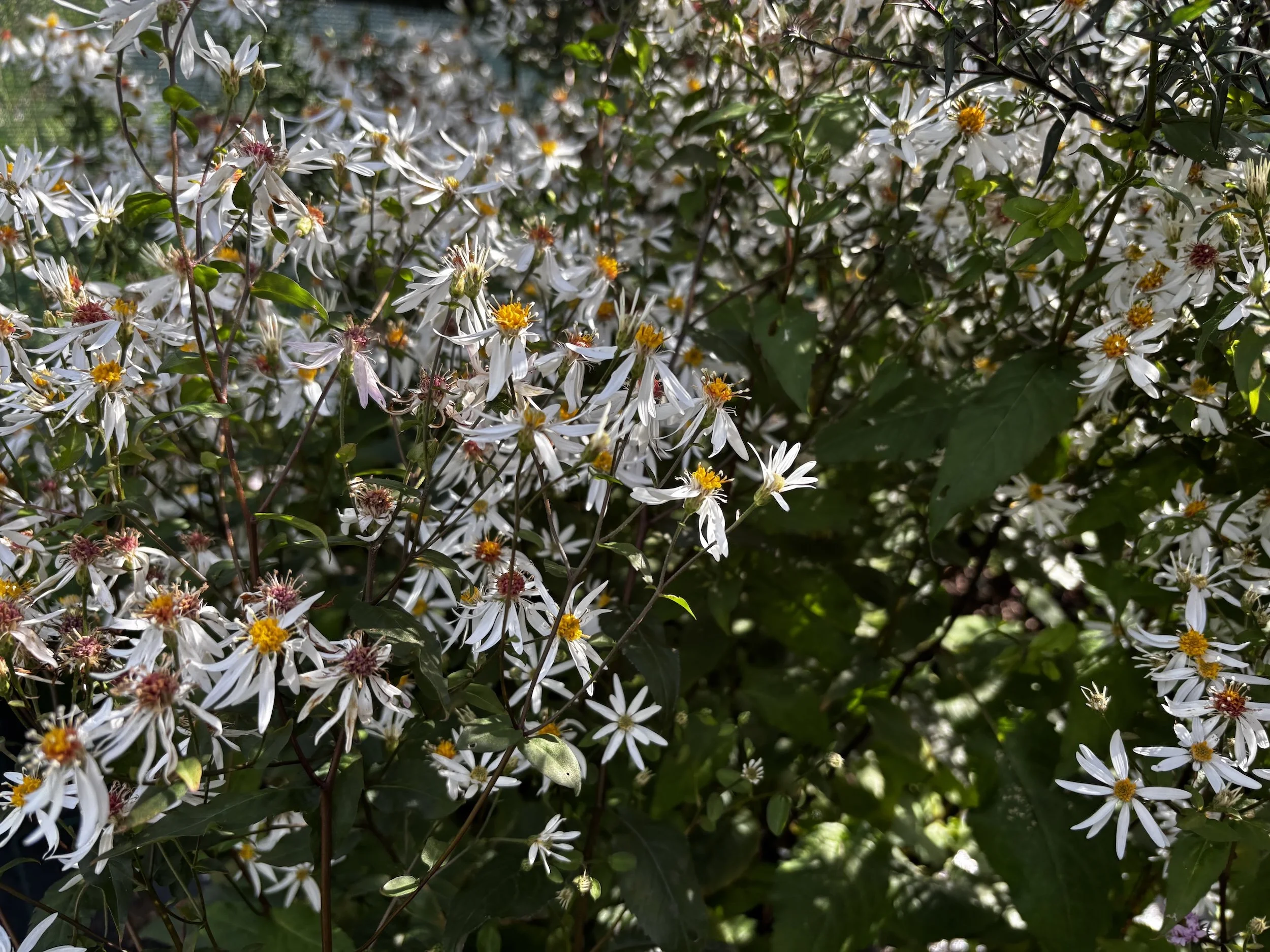
Eurybia divaricata, the white wood aster, is a beautiful and incredibly reliable plant that does really well in shady spots.
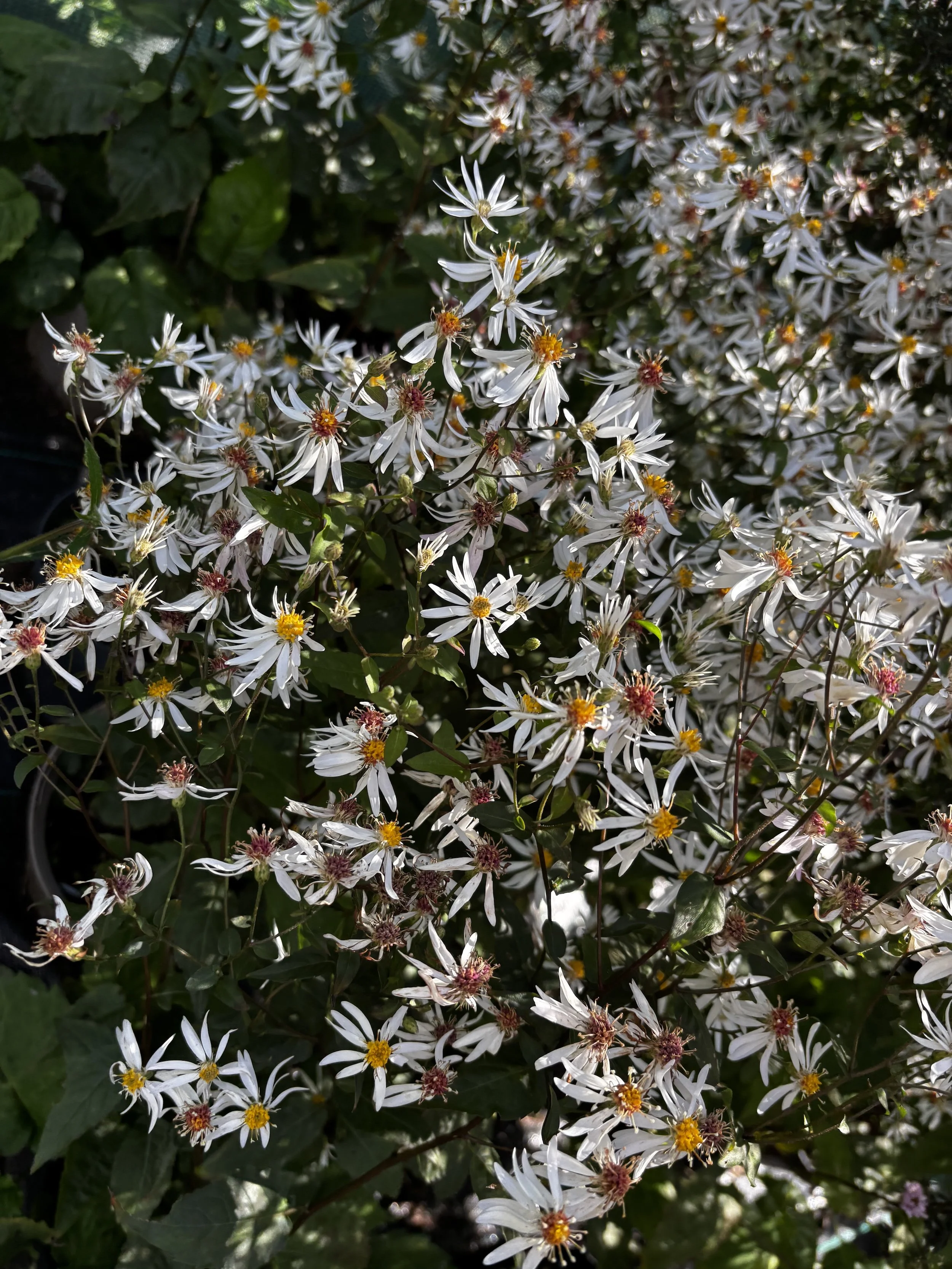
It’s a late flowering perennial, with masses of frothy white flowers on top of elegant black stems, from June all the way through to October. The foliage forms clumps of mid-green leaves, while the seedheads turn to fluffy globes in Autumn and Winter, providing food sources and habitats for a range of wildlife.
Though Eurybia can cope with full sun – and is an excellent drought tolerant plant – it’s most often grown in partially shaded spots, where the white flowers glow out in the gloom.
Botanical name: Eurybia divaricata (previously known as Aster divaricatus)
Plant type: Herbaceous perennial, this will grow back year after year.
Growing conditions:
A really versatile and useful plant that can cope well in trickier spots. Eurybia divaricata does well in full sun to part shade, and is happy in most soil conditions, including dry spots underneath trees or at the base of walls. It’s a plant that copes especially well with drought conditions, making it perfect for a drought tolerant garden or no water garden.
Eurybia divaricata grows to around 60cm tall in fertile conditions, though we’ve found that the plants we grow in our nursery usually only reach about 30cm. They do tend to flop or lean as they get taller, but we don’t stake them, as the lower-growing flowers perfectly mimic low-growing perennials! Their tendency to lean also means they can drift in to surrounding neighbours, helping to break up block plantings and give an appealing painterly style.
How to plant:
Readily available as a container-grown plant, Eurybia is best planted in the Spring or Autumn, though can be planted out at any time the soil isn’t frozen or waterlogged. Follow our guide to planting out container grown plants for detailed info.
Care:
This is a relatively laidback plant that tends to be free of pests and diseases and doesn’t need much ongoing care. As a late-flowering plant, we would often leave the fluffy seedheads in place over the Winter months, where they provide some structure during the dormant season, as well as habitats and food for wildlife. If you want to prevent it self-seeding, however, you can cut back after flowering.
Uses:
With black stems and a profusion of star-shaped flowers on each stem, this makes an excellent frothy cut-flower, with long lasting vase life. Cut early in the morning and place directly into water to prevent wilting.
Closely related:
A similar Eurybia that we’re looking forward to trying out this year is Eurybia x herveyi (previously known as Aster macrophyllus ‘Twilight’) which is similar to Eurybia divaricata, though slightly taller-growing and with lavender blue flowers instead of white.
Grow with:
As this is a woodland plant, it is perfect for underplanting below trees and shrubs. It also looks great with ferns or other shade-loving plants grown for foliage, as the small white flowers contrast well with bigger leaf shapes.
How to propagate:
A really easy plant to propagate, there are a lot of different methods that work well with eurybia. It can be grown from seed – and if it’s in a spot where it’s happy, you might find it self-seeding. Leave new seedlings in situ, or carefully dig out and re-home in another part of the garden.
Basal cuttings can easily be taken in Spring time: remove a few sturdy shoots from the very base of the plant with a sharp knife, and place in prepared pots of compost. See our guide to cuttings for more information.
Also very easy to propagate with division. Dig the plant up in Autumn time and divide into one or more smaller sections, each with a bit of root included. Re-plant one in the original spot, and plant others wherever they are wanted. See our guide to division for more information.