Plant guide: grasses
Ornamental grasses are a really useful group of (predominantly) delicate plants that bring lightness, movement and grace to a garden.
If you want to include grasses in your planting, there is an absolutely huge number to choose between, with some that will do well in almost any condition in the garden and at a range of different sizes, from the tiny Festuca glauca to the large Stipa gigantea.
Planting with grasses has become increasingly popular in recent years, inspired in large part by the prairie style gardening of Piet Oudolf, whose naturalistic planting style blends grasses and herbaceous plants in great swathes, creating movement and year-round structure.
Plant type:
Grasses can be evergreen or deciduous, though evergreen grasses may not stay entirely in place throughout the winter. Many grasses need a regular Spring “hairbrush” to remove the dried leaves that have died over the winter months, though the plant itself may not have gone dormant.
How to plant:
Grasses can be planted at any time of year, as long as the ground is not frozen or water-logged. Some grasses do better with a Spring planting, and some thrive with Autumn plantings. Check the individual planting details for whichever grass you have.
Grasses are usually bought in containers, and most tend to establish happily without too much care. see our guide to planting our container grown plants for more information.
Some grasses self-seed freely if they’re in a spot where they’re happy. Seedlings can be carefully dug out, ensuring the roots are not disturbed, and re-planted in a different part of the garden.
Growing conditions:
There are many, many grasses available and it’s possible to find one that does well in just about growing condition. Grasses are often thought of as being positioned in full sun, and planted in a spot where the setting sun can seen behind them, to catch their leaves at golden hour.
Grow with:
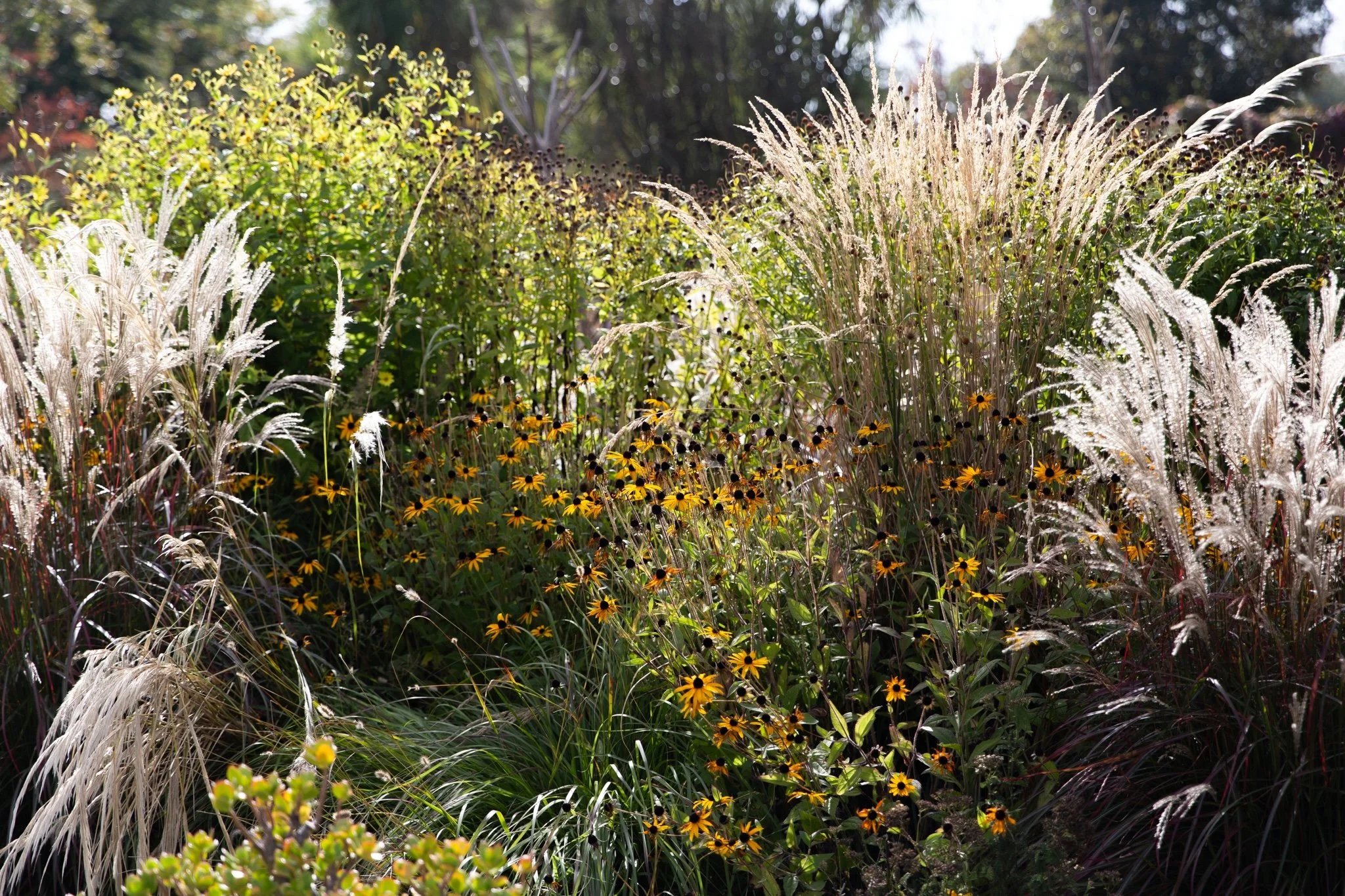
Grasses work well in mixed borders, adding movement among other plants. They pair well with most herbaceous perennials, and look especially good with late flowering plants, that are in bloom at the same time the grasses have their feathery seedheads, see the pairing of miscanthus and rudbeckia in the photo below, right, and calamagrostis with asters in the photo below left.
Grass borders are popular in public gardens, where entire beds are filled only with different varieties of ornamental grass. These can look wonderful in large spaces, though tend to be less impressive in winter and early spring, so would work best in a large private garden, where there is space for other areas of interest during this time.
Of course, grasses have become especially popular in Piet Oudolf style prairie plantings. You can see gorgeous examples at RHS Wisley in Surrey, Hauser & Wirth in Somerset, or Trentham Estate in Staffordshire.
Care:
Most grasses are relatively low maintenance, once established. They tend to do well in fairly dry conditions, so don’t need regular watering.
Deciduous grasses can be cut right back in Autumn, ready to grow fresh the following Spring. Evergreen grasses may need attention to remove dead leaves. Brushing them with a literal hairbrush tends to work well!
Take care with some annual grasses that a quickly seed and take over, such as Briza maxima. Remove seedlings as soon as you spot them.
Favourite grasses:
Stipa ichu is a firm favourite of ours. it has a similar habit and growth to the better known Stipa tenuissima, but we’ve found it doesn’t collapse in damp weather in the same way, and continues to look good through winter.
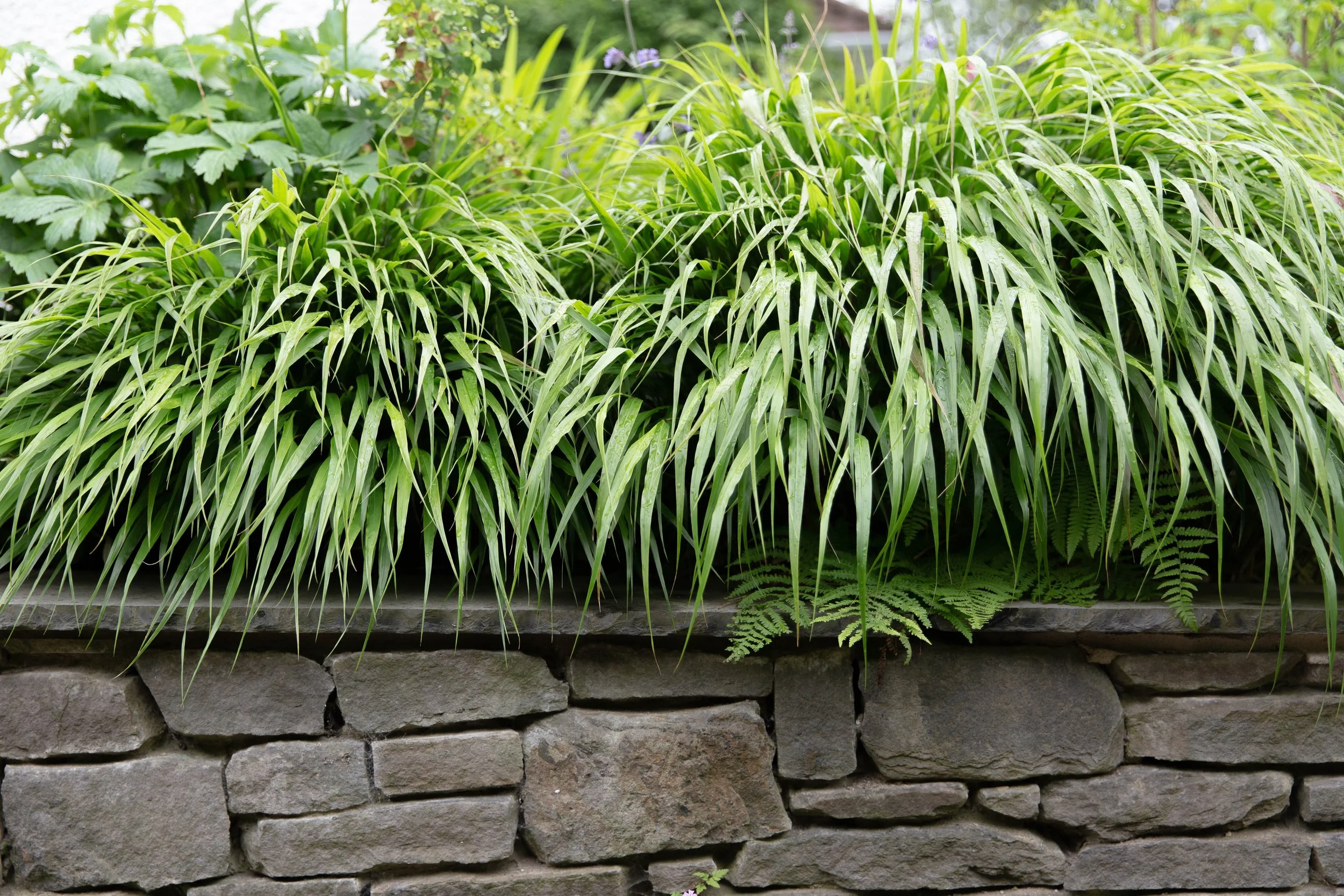
Hakonechloa macra, also known as Japanese forest grass, is one of our most used grasses in planting designs. It’s a gorgeous arching deciduous grass, that turns a bright yellow in Autumn. We love to use it as underplanting for shrubs and at the edges of borders. Read more about how to grow and care for it in our Hakonechloa macra plant guide.
Miscanthus sinensis is a tall-growing grass, that flowers late in the season and helps to extend the period of interest in the garden. It’s available in a few different varieties, such as the red-leaved ‘Ruby Cute’ (below) or ‘Ferner Osten,’ which has bright orange Autumn leaves. a really striking grass that makes a huge impact.
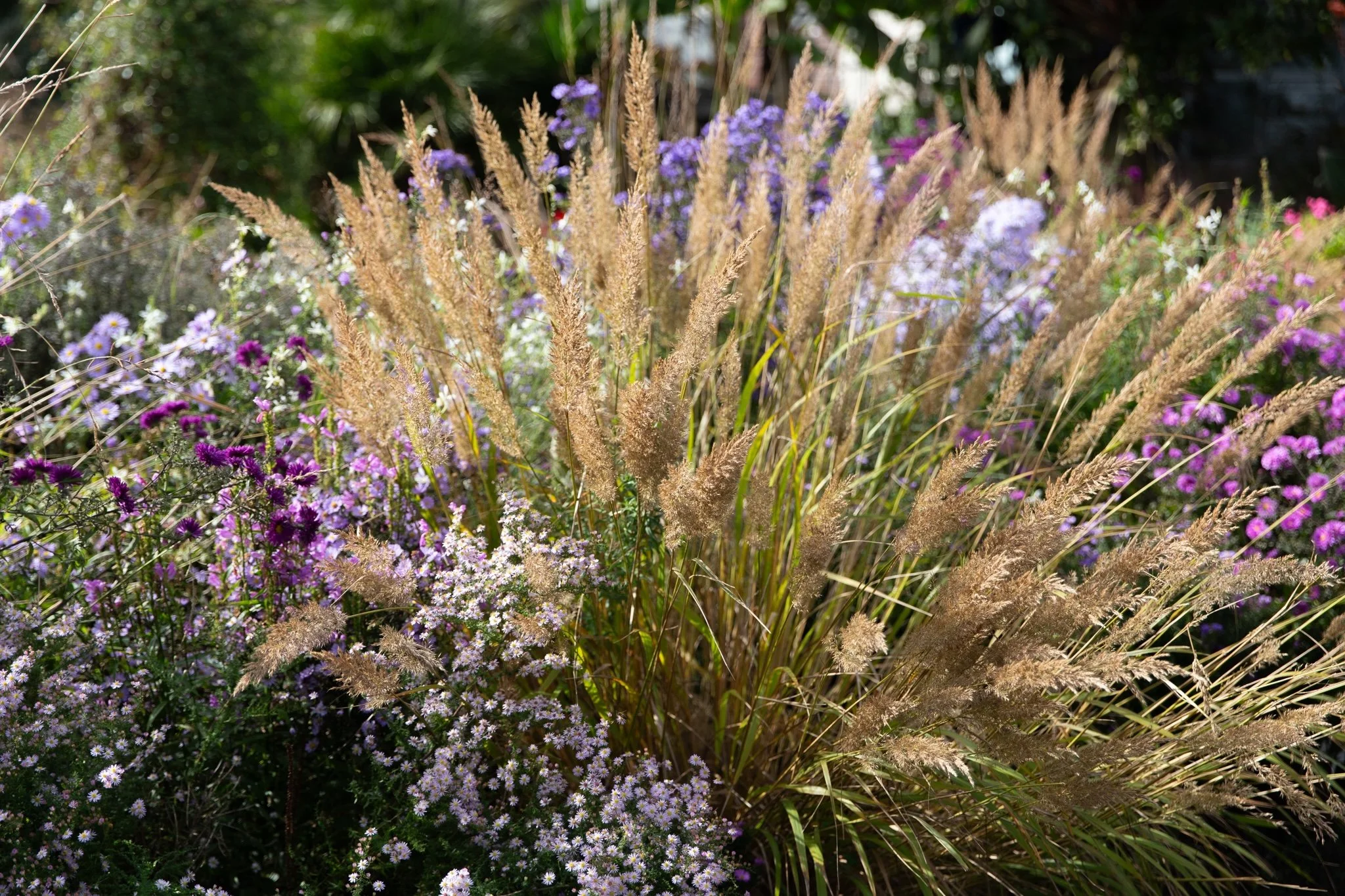
Calamagrostis brachytricha in a border with asters

Hakonechloa macra, like so many grasses, looks amazing backlit by the sun
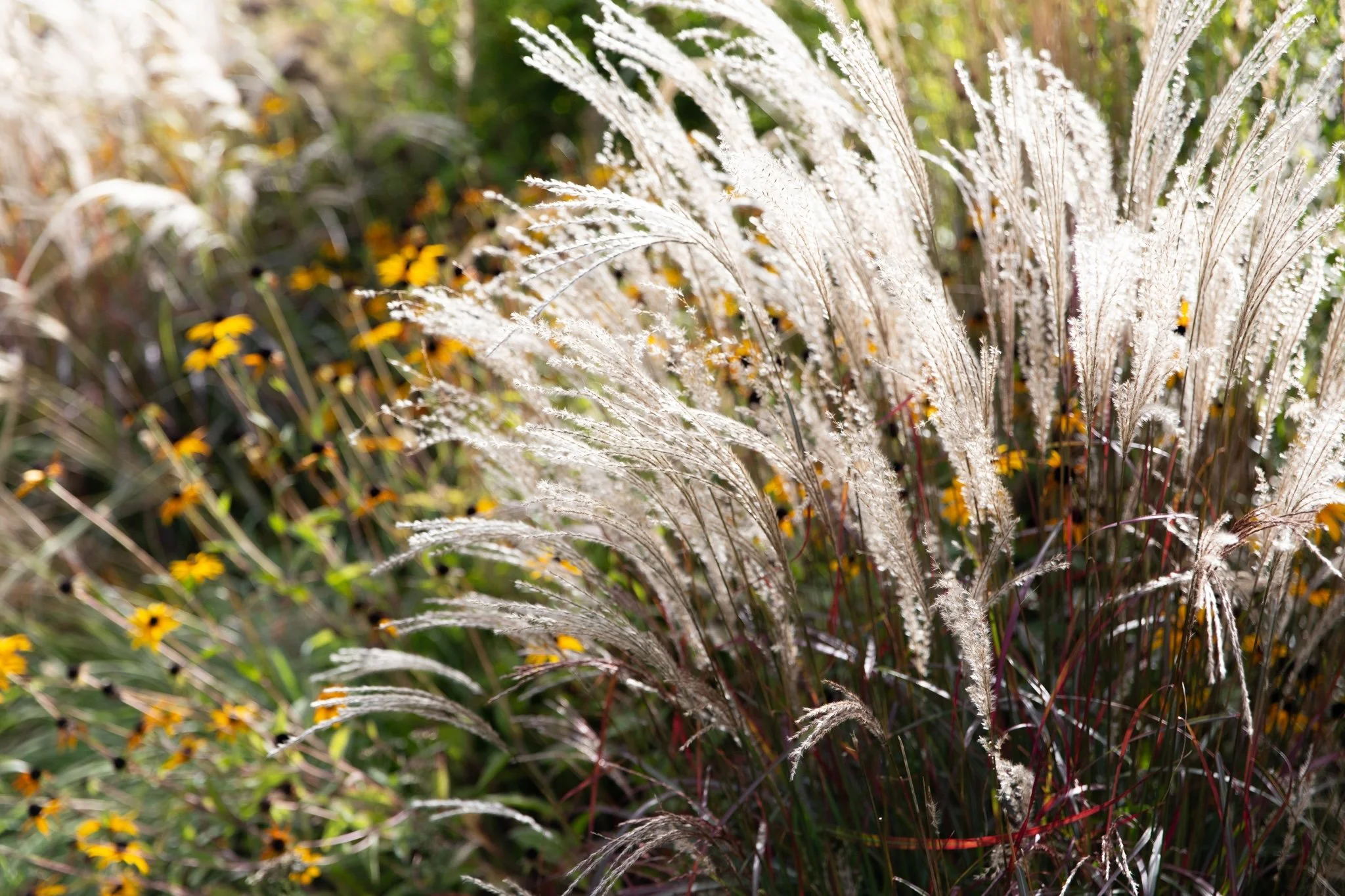
Miscanthus sinensis ‘Ruby Cute’ has red leaves in Autumn, with a froth of flower spikes above
How to propagate:
Most grasses are easily propagated by division. Carefully dig a clump of grass from the bed, taking care not to damage its roots. Using two forks, back to back, split the clump into two. One can be re-planted in its original position, and the other can be planted up in a pot or directly into the ground. See our guide to division for more detailed information.
Different grasses are best divided at different times, from late Winter through to late Spring, so check the best time for your individual species.
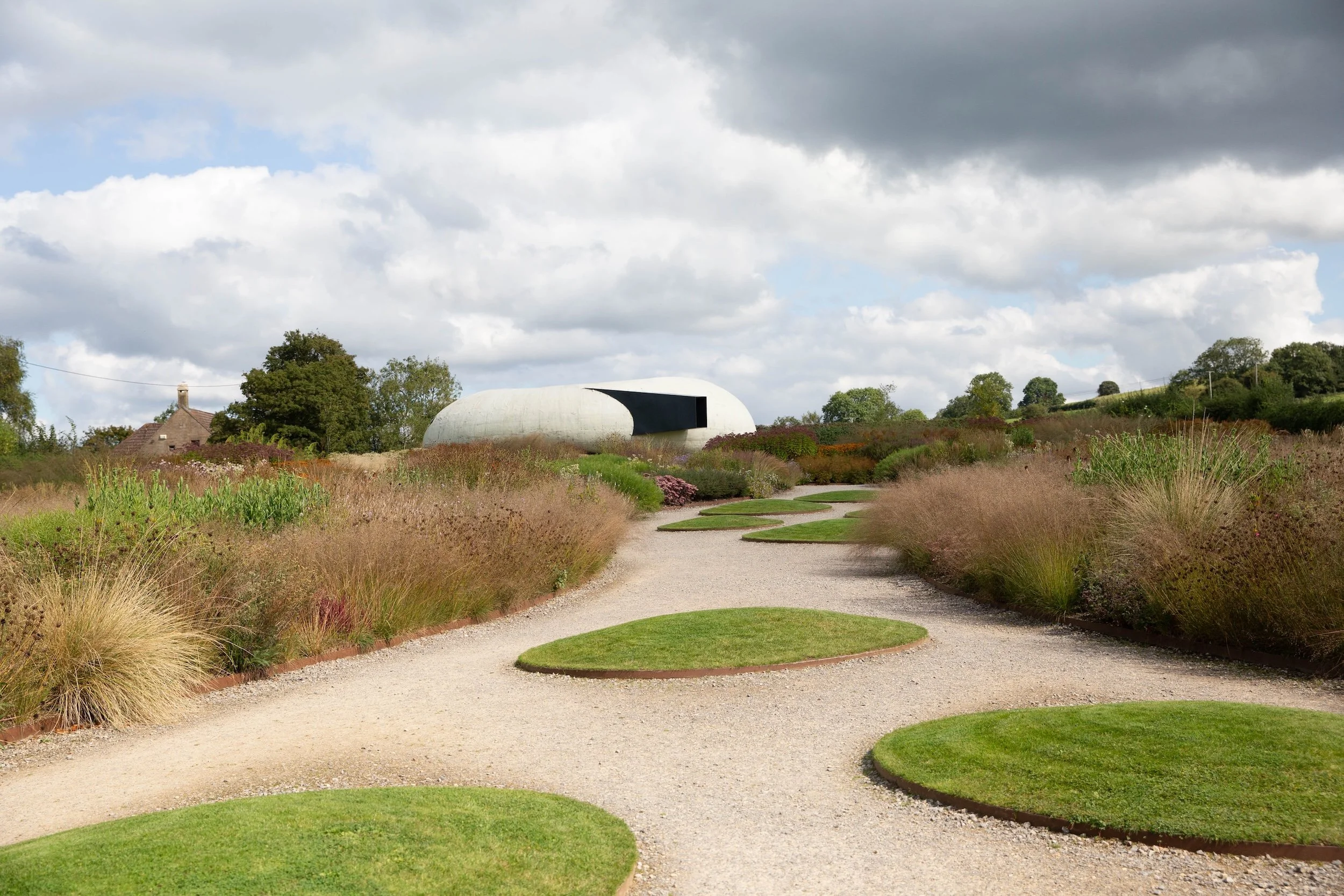
Ornamental grass borders frame the distinctive round circles of lawn at Hauser and Wirth in Bruton, Somerset