Plant guide: Corylus avellana
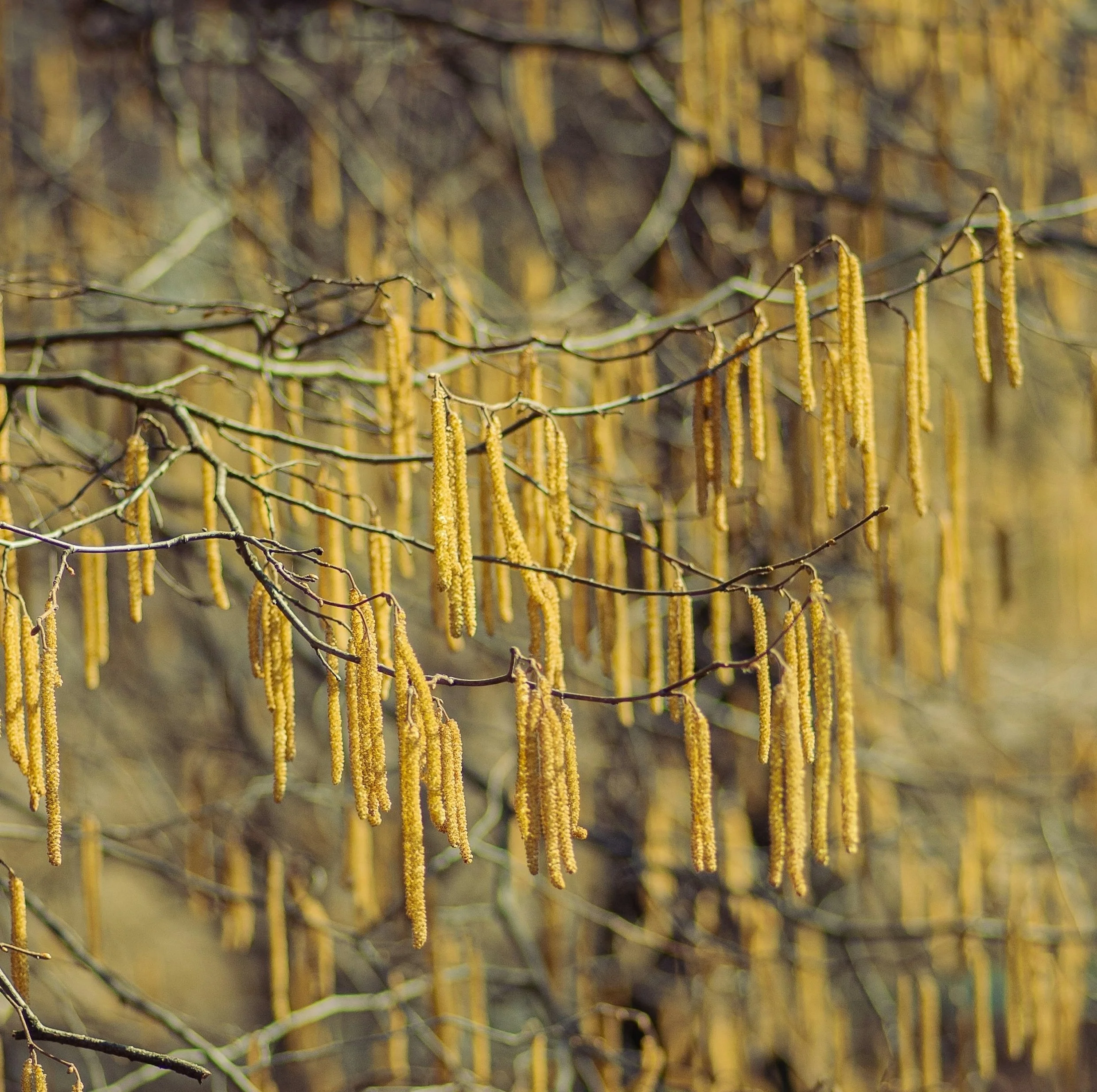
Botanical name:
Corylus avellana
A hazel tree, botanically known as Corylus avellana, is the perfect adaptable tree for a small space. We love to use multi-stemmed varieties to provide height in mixed planting (our Chelsea RHS garden 2025 used three trees like this, underplanted with a lush mix of foxgloves, ferns and anemones, that looked glorious under the dappled shade cast by the trees) but it can also be used in hedging, as a shrub, or as a focal point on its own.
Native to the UK, hazels grow especially well in the conditions we have here in Swansea, thriving in moist but well drained soil. They’re low-maintenance and need little care, but respond well to regular pruning. And they’re an incredibly useful tree to have: not only providing aesthetic interest but also the harvest of nuts every Autumn, and prunings can be used as handy pea-sticks in the garden.
Plant type:
Deciduous shrub or small tree
Growing conditions:
Hazel trees need full sun to part shade to grow best. A relatively slow-growing and small-sized tree, hazels take more than a decade to reach their full size and can be easily kept in check with pruning. For smaller varieties, Corylus avellana ‘Contorta’ – the corkscrew hazel – is even slower growing and will naturally stay a more compact size. It also has gorgeous twisted stems that are especially attractive in the winter months once the leaves have fallen.
As it’s a smallish tree, hazels do well in mixed borders, surrounded by other plants, as well as on their own as a focal point. If planting alone, take a look at a multi-stemmed variety, which has an especially attractive winter form.
All hazels need moist but well-drained soil, so don’t grow as well in very sandy areas.
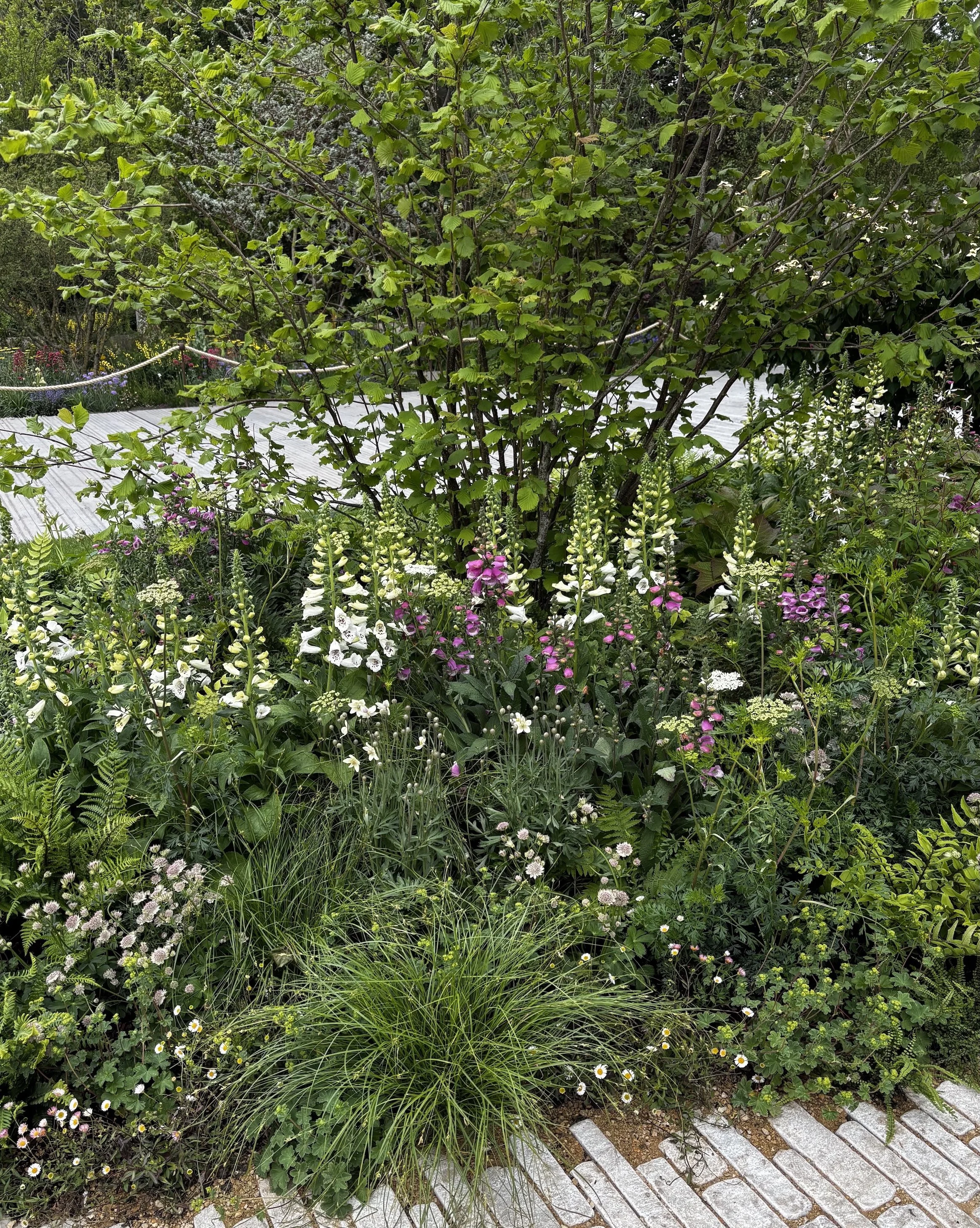
In our RHS garden at Chelsea, underplanted with foxgloves
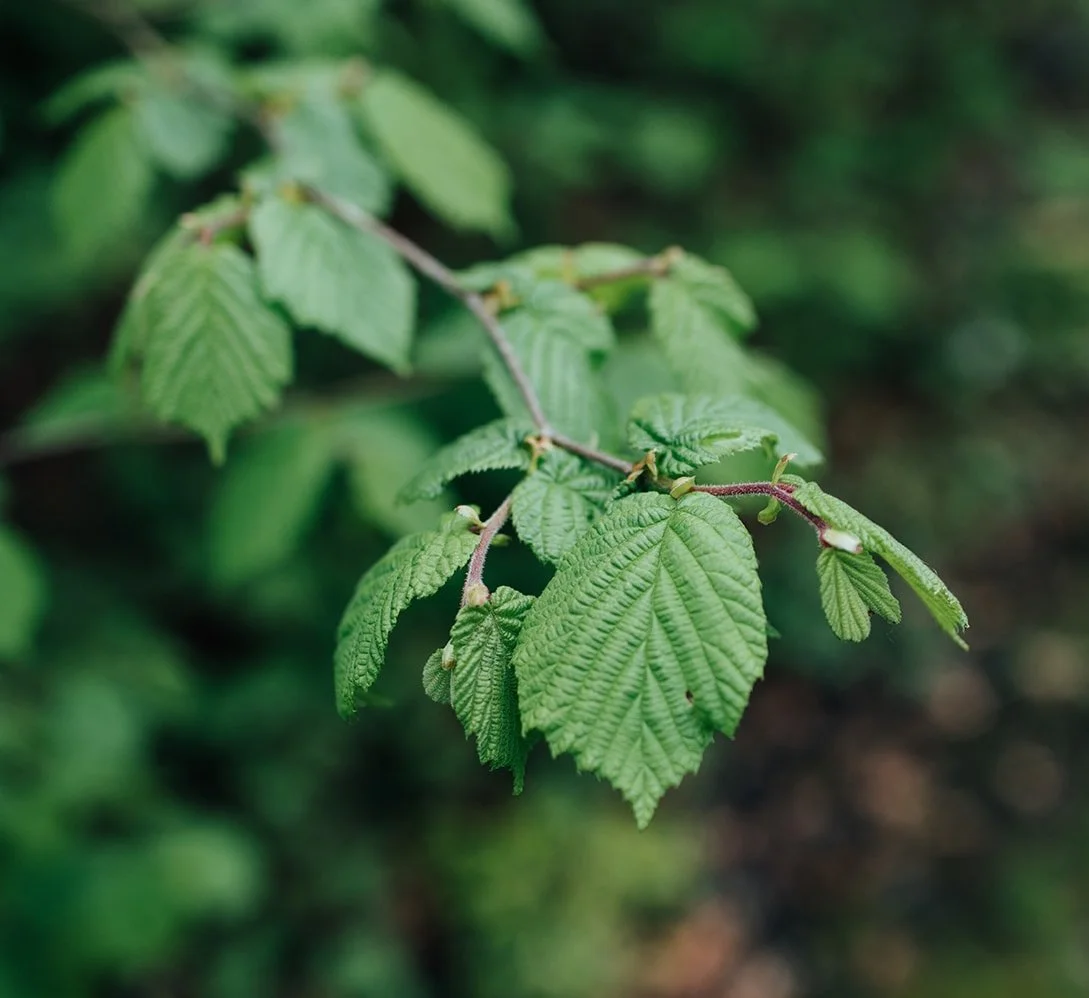
Corrugated leaves of a hazel in Spring
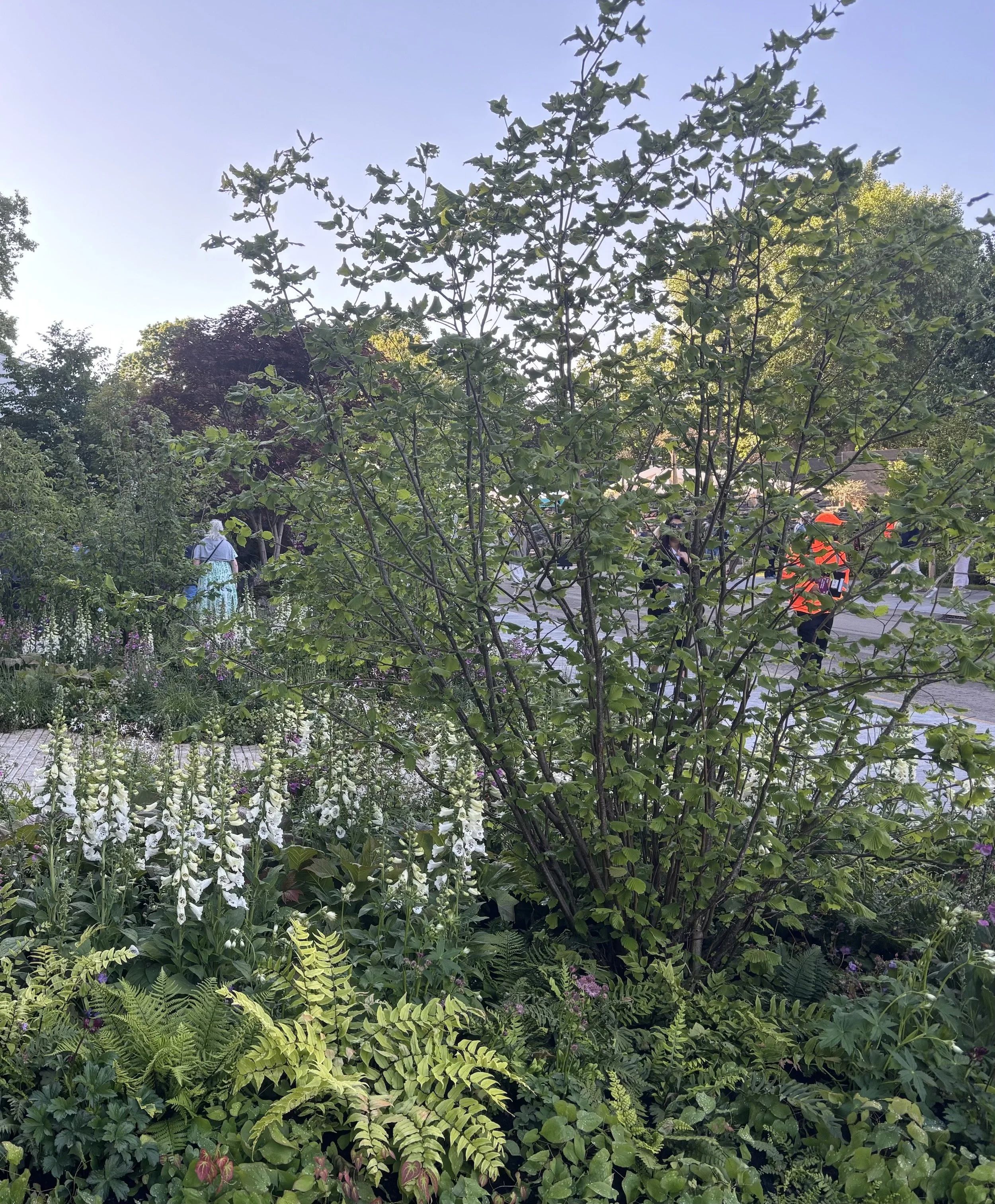
Multi-stem trees provide excellent structure
How to plant:
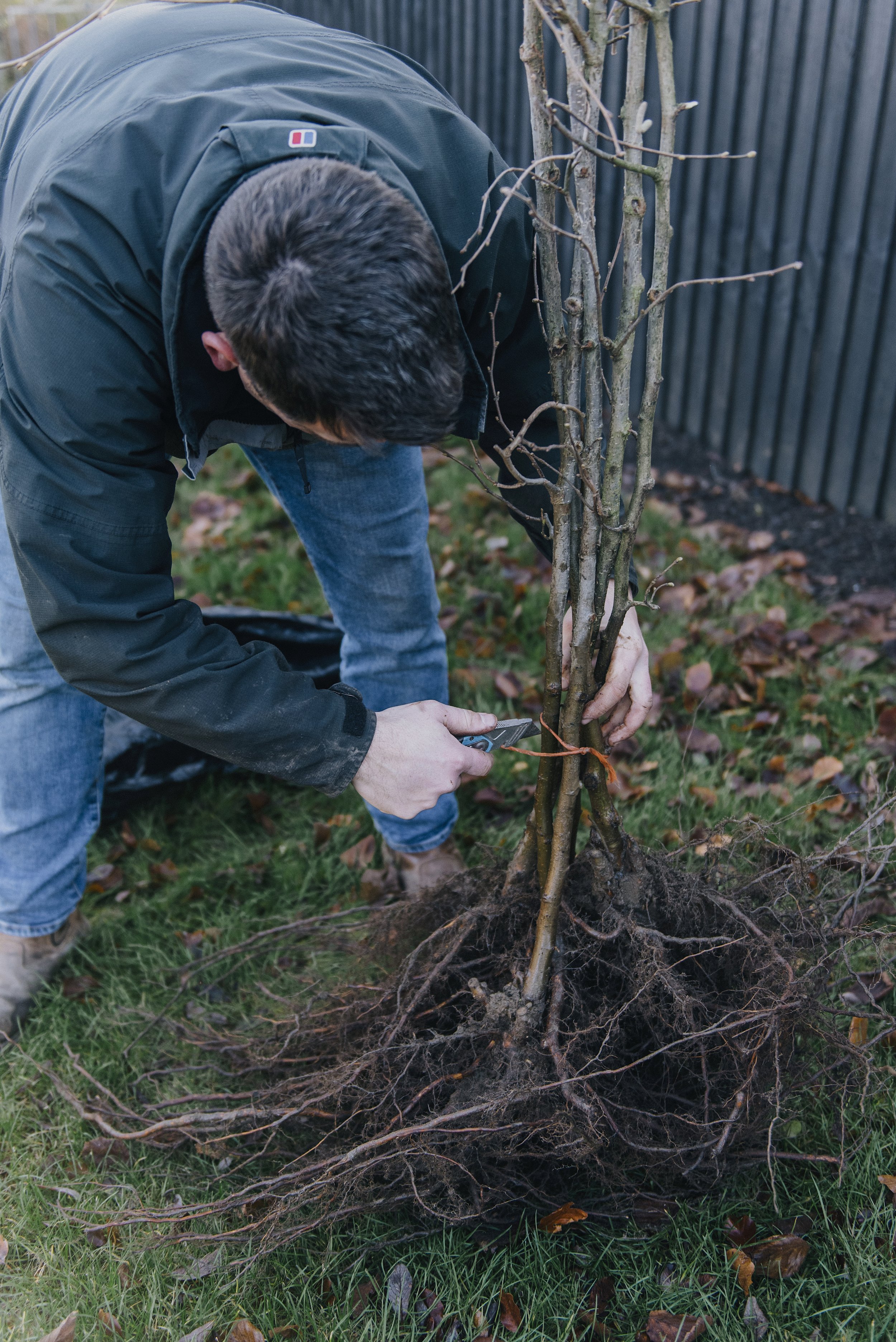
Hazel trees can either be bought as bare roots or as container grown plants. We always recommend buying bare root trees when possible, as this is the most cost effective way of buying them, and they’re more likely to establish quickly.
Bare root trees can be planted in the dormant season, roughly between November and March, whereas container grown plants can be planted year-round, as long as the ground isn’t frozen or waterlogged.
For more details on how to plant, see our guides to planting out bare root trees and planting our container grown plants.
Uses:
As well as being an attractive tree to grow in its own right, hazel branches have many uses, and hazel is often grown to coppice – where the branches are cut back on a seven year cycle to use the prunings. Hazel sticks are often used for weaving, either to make objects like baskets, or on a larger scale, to make fences. The smaller shoots are also frequently used as plant supports, often called pea sticks, pushed in around climbing plants such as peas. Branches from the corkscrew hazel are popular in floral displays, as are the bare branches with only the catkins hanging off them.
Of course, the hazel tree also makes hazel nuts. These can be harvested around September / October time each year. Nuts usually ripen when the leaves on the tree start to change colour. Watch for the nuts to swell and start to dry out. They should be ready to eat once the papery covering around the nut has started to pull back a bit. Nuts are incredibly popular with lots of wildlife, including squirrels, so trees may need other be netted, or grown in fruit cages, to prevent the nuts being taken before they ripen!
How to propagate:
The most reliable method of propagation is by layering. Layering is a form of propagation that leads to fresh roots and a new plant growing from a section of stem. Pull a long, young stem downwards so that it comes into contact with the ground, and hold in place with a peg. After a while, around a year usually, the section touching the ground should grow roots and start to create a new tree. Once the new plant is well established, the original stem can be cut, to separate it from the parent, and it can be re-planted elsewhere.
Hazel trees can also be grown from seed, in this case the hazelnut. Nuts are popular with a huge host of animals, especially squirrels, but if you can collect a nut before anything else does, they are relatively quick to grow into trees.
Collect as many nuts as possible and put them in a bucket of water. Discard any that float, as they’re less likely to germinate.
Nuts are best started off in pots, as they are likely to be dug up in open ground and eaten. Place the nut in a pot of compost mixed with sand, and gently cover. It’s best to secure the top of the pot with a wire mesh to protect against mice and squirrels. Leave the pot in a shaded place and ensure it’s doesn’t dry out. Nuts should germinate the following Spring. Once shoots appear, keep the pot well-watered and leave the plant growing there for a year or two before planting in its final position.
Care:

Once established, hazel trees don’t need much ongoing care beyond pruning to keep to a desired size. Prune in late winter or early Spring. First remove any dead, diseased or dying branches. Cut back any other branches to keep it to the right shape.
If growing a multi-stem tree, then the bottoms of the branches can be “clear-stemmed” where the leaves are removed in order to show the form of the branch structures. This is really easy to do by hand: just strip the leaves away from the lower sections so that the bare branch is on view.
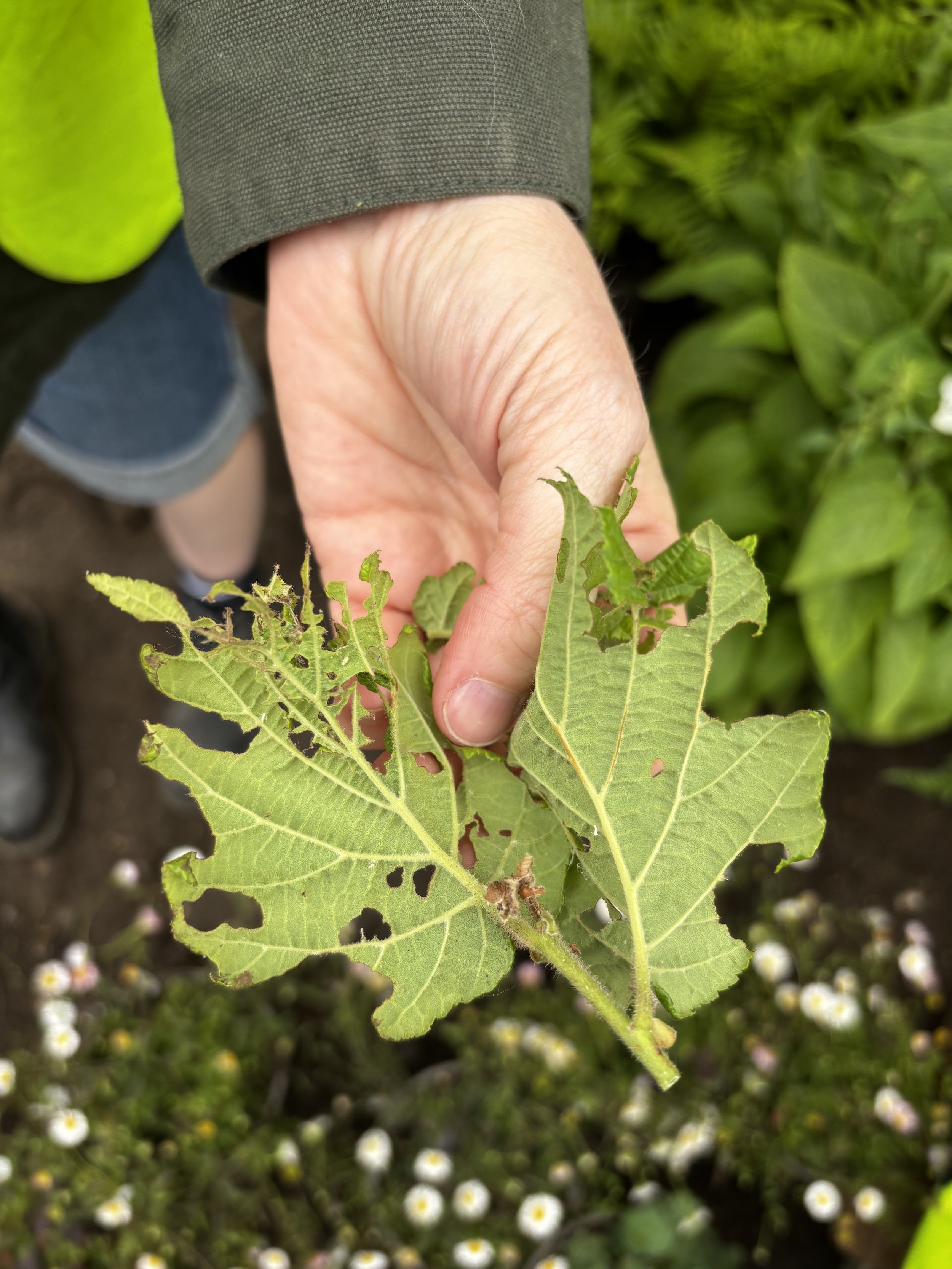
Hazels are a popular food source of a few different types of caterpillars, especially the nut tree tussock moth and the emerald moth. You might see caterpillar damage in evidence on leaves, as chewed edges. We used hazel trees in our garden at Chelsea flower show 2025, and found a few caterpillars had made it in on the leaves! The damage is fairly distinctive, as you can see in the photo on the right.
Along with caterpillars, hazels are also prone to damage from a variety of other pests such as aphids, sawfly larvae and gall mites. However, none of these are likely to cause any serious concern to the tree, and any influx in pests tend to lead to an influx of predators that eat them, such as birds or ladybirds.
At Chelsea, we hand-picked the caterpillars off the leaves (we noticed that they tended to be drawn to the very top leaves of the tree), which halted any spread of nibbling, but in a home garden, you wouldn’t even need to do this, but simply sacrifice a few leaves to the caterpillars – and remember that caterpillars in Spring time mean more moths and butterflies later in the year!
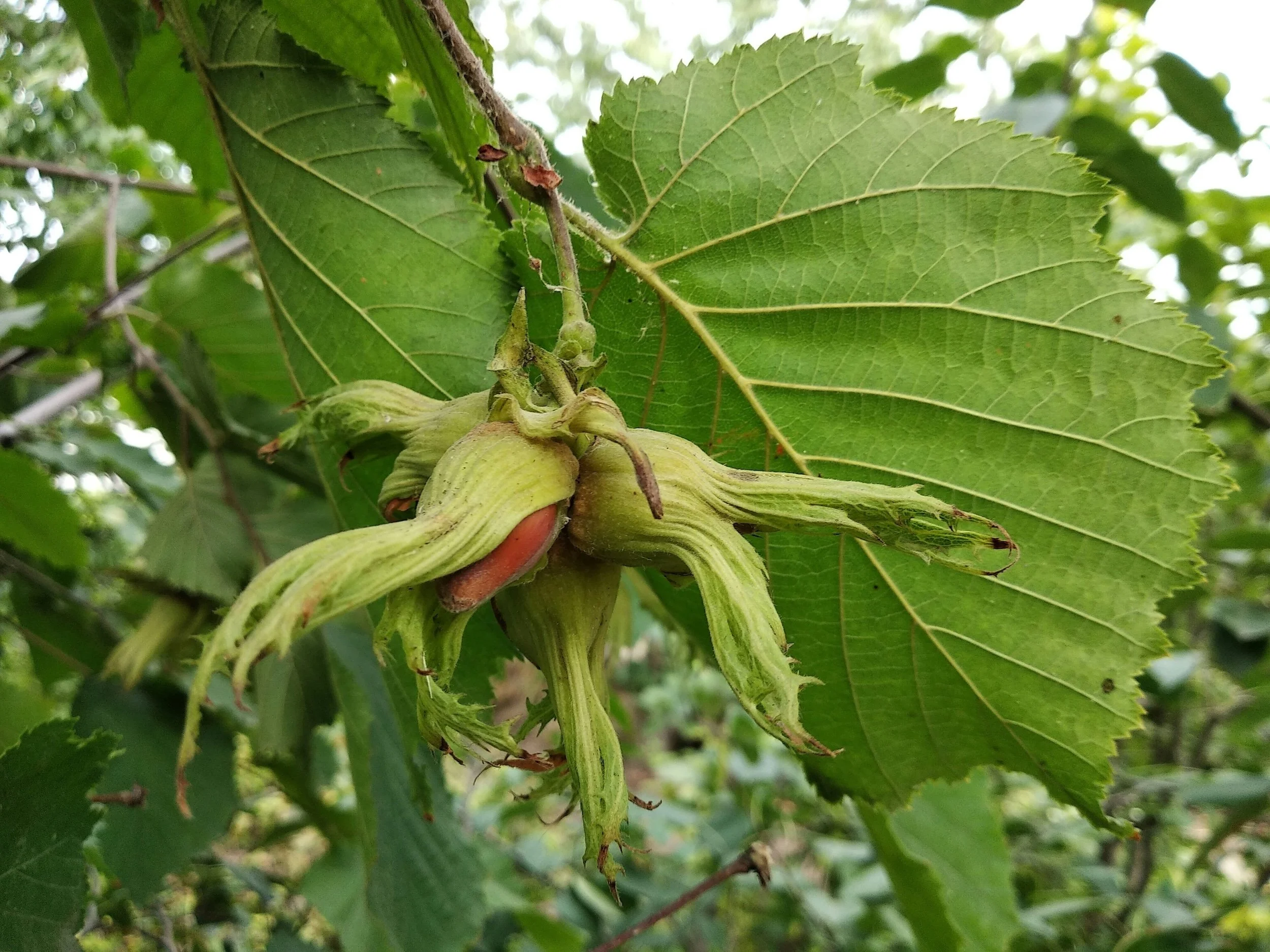
Hazelnuts are very popular with squirrels, so trees may need to be netted or grown in fruit cages, if you want to protect your harvest!