
Plant guide: Geums
Botanical name:
Geum spp.
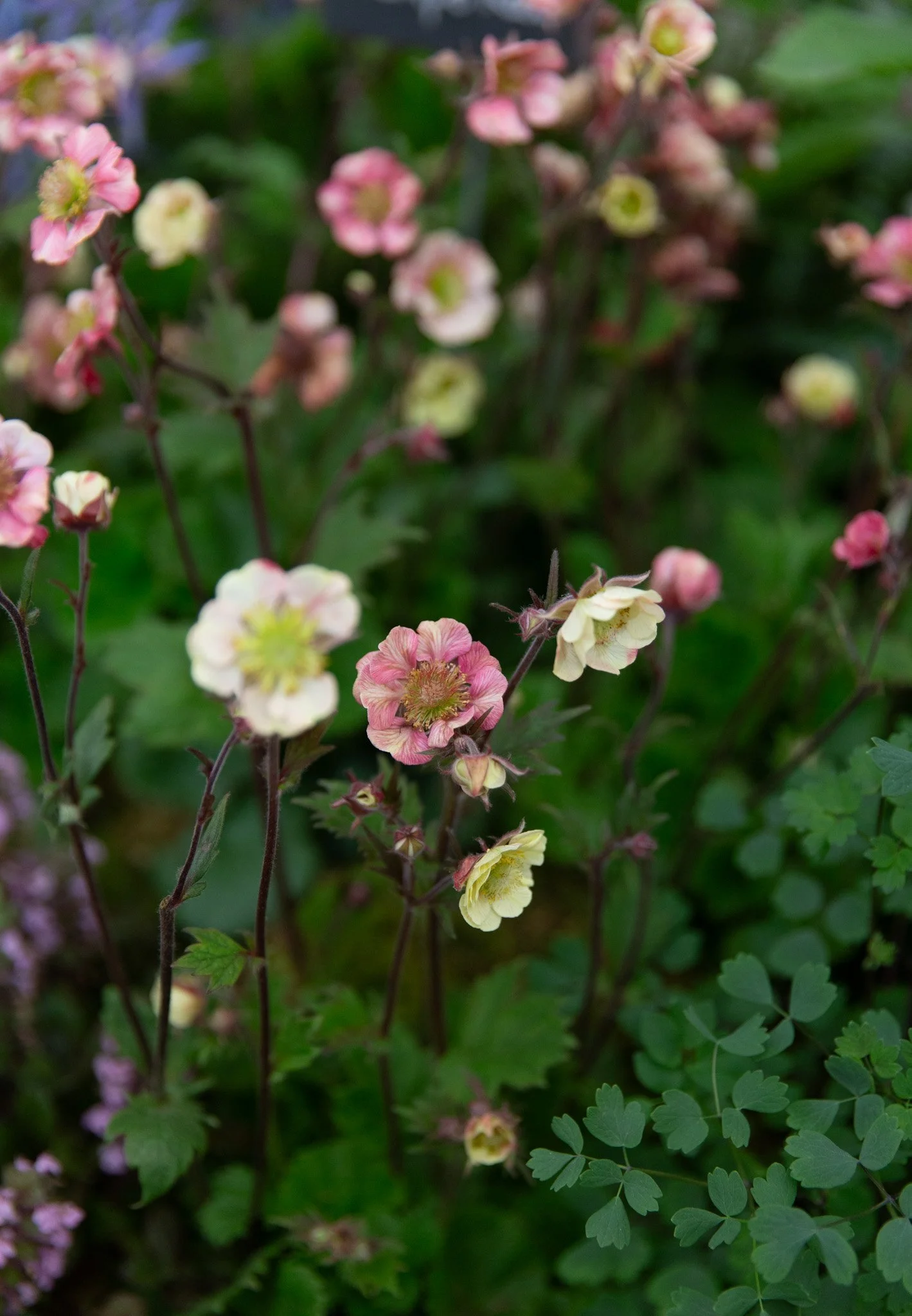
Always a favourite in gardens at the Chelsea flower show, geums have become a staple in the Spring garden in recent years. It’s not hard to see why, they’re a laidback and easygoing plant to grow, not needing much care, but flowering for a long period in May, with cheerful flowers in red, orange and yellow colours.
Plant type:
Herbaceous perennial
Growing conditions:
Geums are low growing plants, and tend to look good at the front of borders. They need a spot in full sun to part shade, and do well in most soil conditions, though appreciate a moist but well-drained spot. In drier soils, dig in plenty of well-rotted organic matter before planting.

We planted orange-flowered geums in and around our RHS coronation container at Blaneavon, the bright coloured flowers working perfectly with the rusted coal cart planter
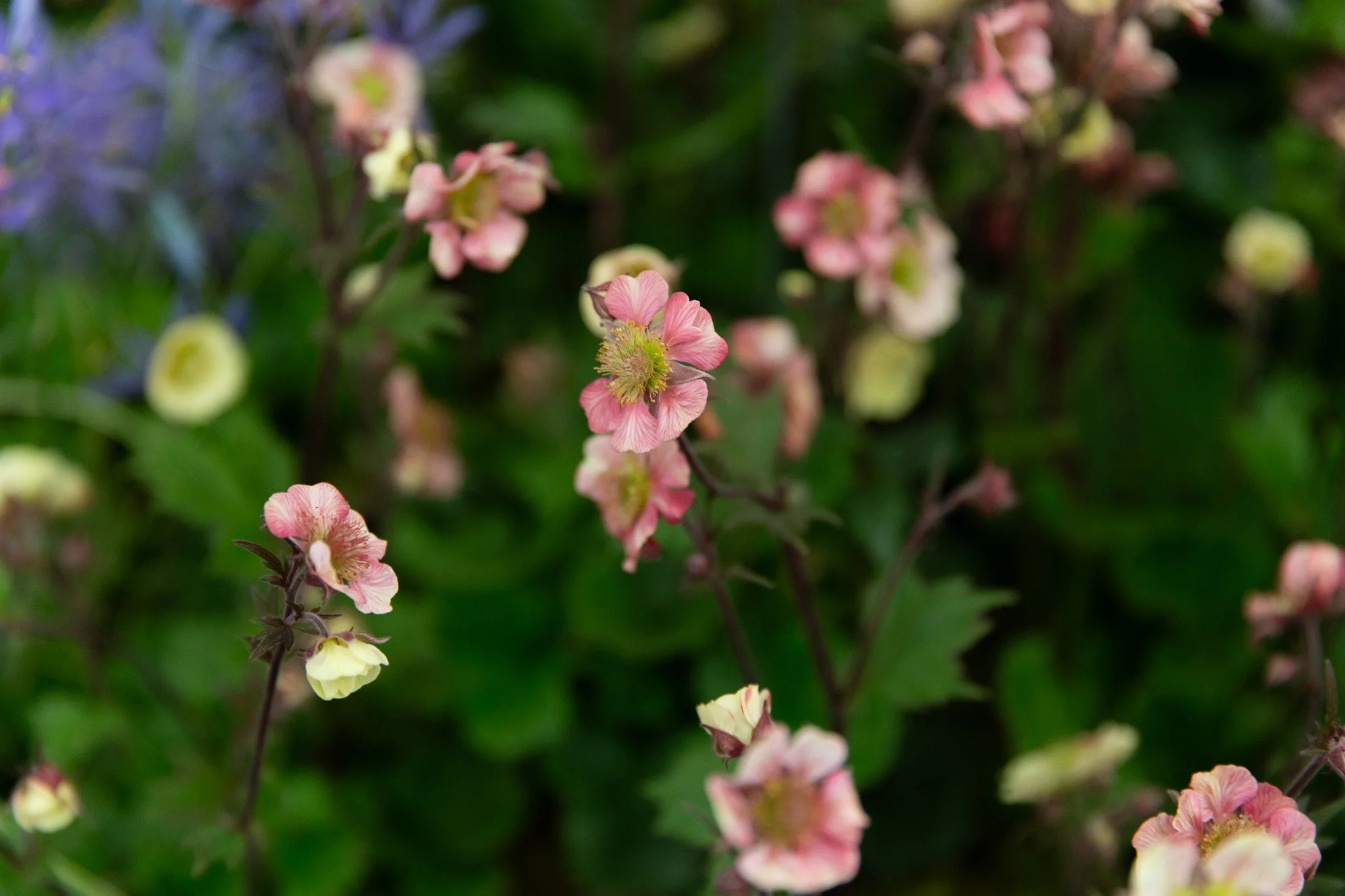
Most geums flower in a range of pinks, peaches and orange
How to plant:
Container grown plants can be easily found in garden centres or plant nurseries, and are best planted in Spring or Autumn, while the plant isn’t in flower. Dig a hole to the depth of the pot and twice as wide, gently remove the plant from the container and place in the hole, then backfill and water well. For more info see our guide to planting out container grown plants.
Seeds can be saved and tend to germinate relatively easily, but won’t come true to the parent plant, so may display different characteristics, for example a different flower colour.
How to propagate:
Geums can be easily propagated by division. Division is best done in Autumn. Dig out the plant and cut carefully into two sections, re-planting one in the original spot and the other in a new position. See our guide to dividing for more info.
They also spread from rhizomes – side shoots that come off the edges of the plant and spread out to create new plants. Once these appear, you can easily separate the new plant away from the parent, and either grow in a pot until larger, or plant straight out in the garden. Take care to water any divisions and new plants well while they establish in their new position.
Favourite varieties:
The apricot-orange varieties of geums are some of our favourites. Geum ‘Mai Tai’ has especially beautiful peach-coloured petals.
‘Apricot Pearl’ is another similarly-coloured plant, while ‘Totally Tangerine’ is a popular variety with much more vibrant orange flowers, as the name suggests.
Care:
Once established, geums don’t need much ongoing care, though do water well in any dry spells for the first growing season after planting.
Deadhead plants after flowering, to make sure the plant puts its energy into fresh blooms and growth rather than seed production.
To keep geums performing at their best, divide plants every 3-4 years.
Grow with:
Geums look great planted alongside alliums. Both flowering at the same time, the more straggly growth of the geums contrasts well with the stately upright stems and lollipop heads of alliums. The colours tend to be from opposite sides of the colour wheel as well (orangey-peach geum flowers and purpley-blue allium flowers) so they provide an excellent contrast to each other, making both flower colours really pop.
We often plant geums alongside hackonechloa and ferns — all do well in similar conditions of damp and slightly shady areas, so this is one of our favourite combinations to plant in dappled shade.
Similar in colour palette and stately growth, salvia look great alongside geums, as do Verbascum, which have flowers in both contrasting and complimentary colours.
For an airy planting vibe, try geums alongside grasses such as Stipa ichu or Miscanthus.
Uses:
Geums are a good cut flower, and last well in the vase if cut from the plant when partially open. Cutting will also encourage more flowers to bloom. Condition after cutting, see our guide to conditioning cut flowers for more info.


