Plant guide: Linaria purpurea
Botanical name:
Linaria purpurea
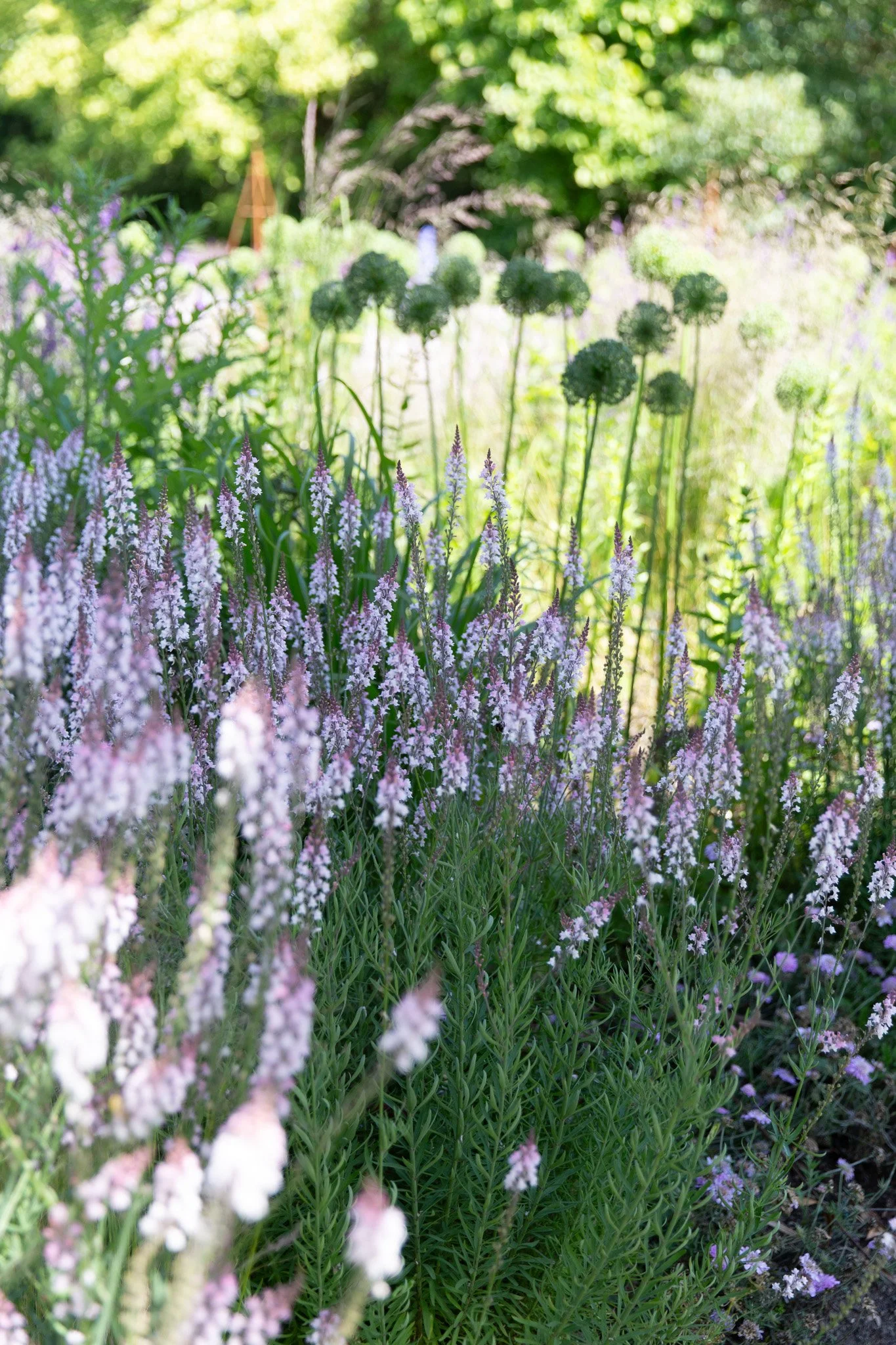
The sturdy and resilient toadflax is an easy perennial to add to any border, which thrives in sunny locations and does well with little care. Originally from Southern Italy, the plant has naturalised throughout Europe due to its vigorous growth – plant it in your garden and you’ll find it happily self-seeds and pops up everywhere!
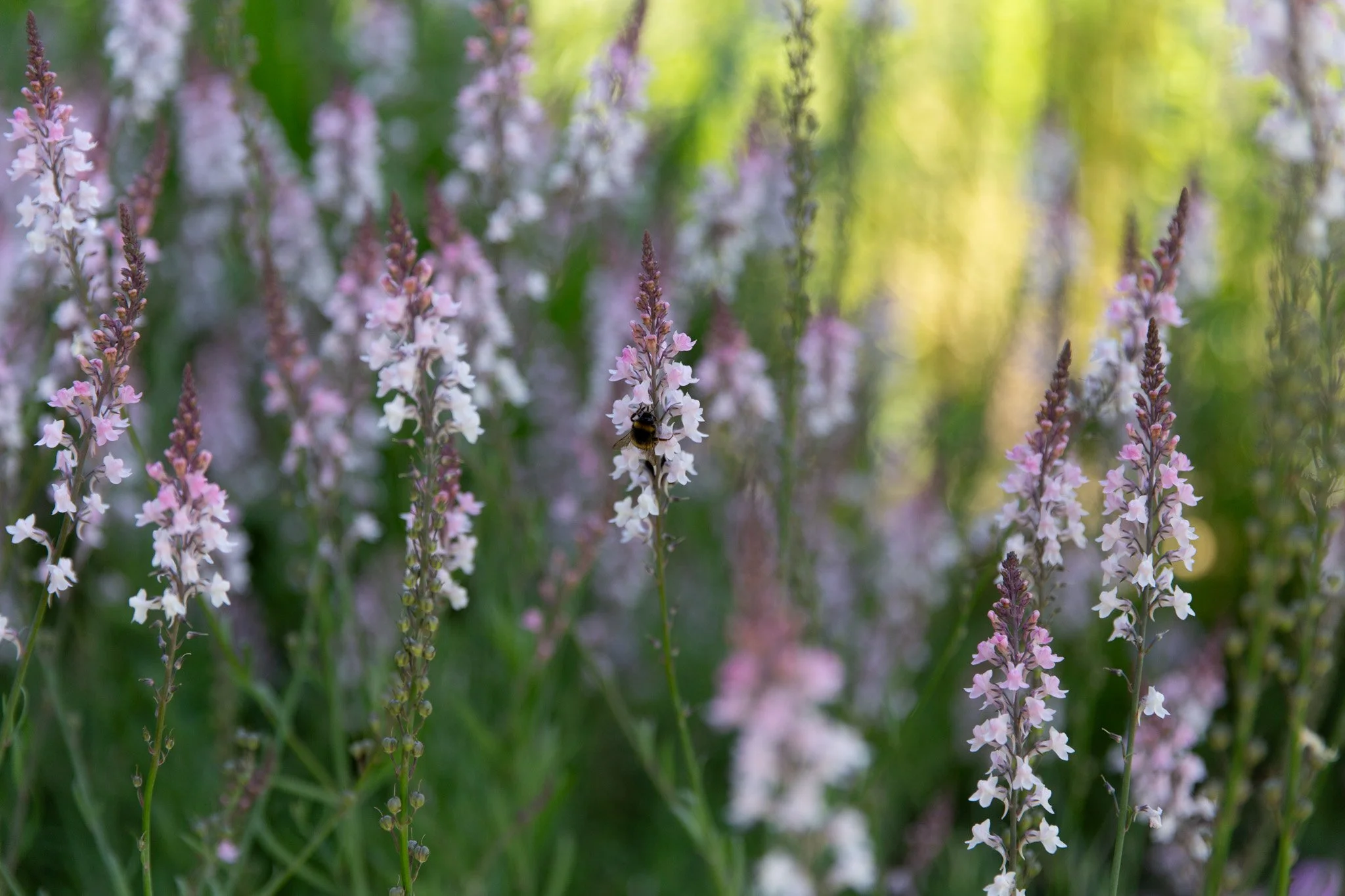
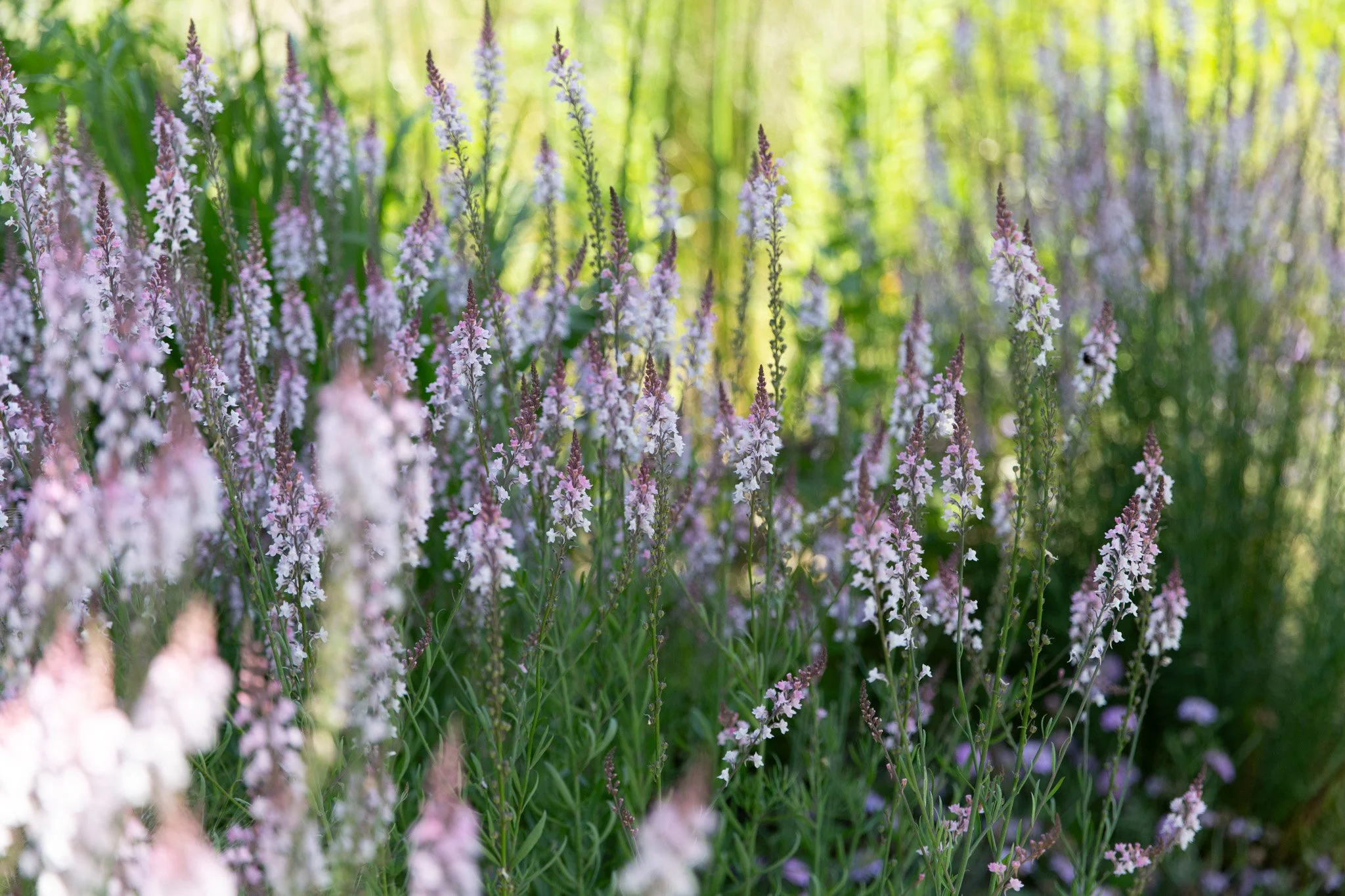
The species plant has small purple flowers held on tall spikes, but we’re especially fond of the bred variety ‘Canon Went,’ which has more delicate pinky-white flowers. Whichever variety you prefer, it’s perfect for mixed borders, gravel gardens or front gardens, to bring colour and elegance throughout the summer. It’s always popular with bees and other pollinators, so is an especially great plant for wildlife.
Plant type:
Herbaceous perennial. Linaria will die back below the ground each winter and reappear again the following Spring. Some plants in warmer locations may be semi-evergreen, leaving some leaves and branches through the winter months. See our guide to plant types for more information.
Growing conditions:
As you’d expect from a Mediterranean plant, Linaria does well in sunny, well-drained locations, and copes best with low soil fertility. It’s a relatively tall plant, reaching up to about a metre, so looks good in the middle of a border.
How to grow:
Easily grown from seed, which is readily available in most plant nurseries or garden centres. Sow seeds in Spring (March – April) and they will flower later the same year. See our guide to sowing seeds for more information.
The plant is a short-lived perennial, and will typically thrive for about 3-4 years, however, it is a happy self-seeder, so by the time the original plant is past its best, there will likely be seedlings nearby that can either be transplanted, or left where they are to provide a new succession of plants.
How to propagate:
This is an easy plant to propagate. It grows well from seed, see above, though self-seeded plants won’t necessarily grow true to the parent type; flower colours may vary. Linaria that have been bred for specific features, such as the peach-coloured flowers of ‘Canon’s Went’ or ‘Peachy’ will only grow true to the parent if the plants have been isolated from other types of toadflax, in other words, if the pollinators haven’t visited different varieties of linaria while they’ve been pollinating. If crossed with other linaria, the flower colour will vary, often reverting to the standard purple colour of toadflax. For certainty of flower colour with specific varieties, buy new packets of seeds, which will be guaranteed to have the same characteristics. However, it can also be fun to collect seed from existing plants, germinate and grow these and wait to see what colour flowers appear on the new plants!
Linaria can also easily be propagated from softwood cuttings in the spring, or by division in Autumn, and as these new plants are clones of the parent plant, they will always have the same coloured flowers. See our guides to cuttings and division for more detailed information.
Favourite varieties:
Linaria purpurea ‘Canon Went’ is an especially elegant variety, with pinky-white flowers and is our favourite to grow.
Linaria purpurea ‘Peachy’ is, as its name suggests, a variety with gorgeous peach-coloured flowers.
Care:
As long as it’s in a spot with its ideal growing conditions (plenty of sun and well-drained soil) then linaria needs little care. Any dead growth can be pruned in late Spring if needed.
It’s a plant that responds well to a “Chelsea chop”: being cut back hard around May time (when the Chelsea flower show is on). Cutting it back at this time leads to fresh new vigorous growth, and a shorter plant that won’t need staking, with an extended flowering season.
It will self-seed in a spot where it’s happy, but you can remove any seedlings that aren’t wanted easily by hand weeding.
Grow with:
Linaria looks great growing alongside grasses, which add movement to its elegant spikes. One of our favourites in Stipa ichu. Other drought resistant plants are also a good match, such as lavender, nepeta and echinacea.
It also works well in gravel gardens, or grown alongside paths, a location where it will often self-seed.
Uses:
Linaria produce a huge amount of flowers each season from every plant, and they last well in the vase, so this is a great plant to use for cut flowers. The flower spikes open from the top down. Cut a spike when the top third of flowers are open, the rest will open inside. Condition before adding to a vase (see our guide on conditioning cut flowers for more information). Linaria blooms usually last between five and seven days once cut.